Commodity Price Volatility 2026: US Hedging Strategies
US businesses must prepare for significant commodity price volatility in 2026, where strategic hedging can protect operating budgets by up to 8% through proactive risk management.
As we approach 2026, the landscape for US businesses is marked by an undeniable truth: commodity price volatility is not just a possibility, but a near certainty. This fluctuating environment presents both formidable challenges and unique opportunities for companies aiming to maintain stability and profitability.
Understanding the drivers of 2026 commodity price volatility
The year 2026 is poised to bring a complex interplay of global factors that will significantly influence commodity markets. Businesses must look beyond immediate trends to understand the underlying forces driving these fluctuations. This foresight is crucial for developing robust strategies.
Several key drivers are expected to shape the commodity landscape. Geopolitical tensions, for instance, remain a persistent wildcard. Conflicts or political instability in key producing regions can disrupt supply chains and trigger rapid price spikes. Similarly, climate change continues to manifest through extreme weather events, impacting agricultural output and energy demand globally.
Geopolitical shifts and supply chain impacts
Geopolitical developments often have an immediate and profound effect on commodity prices. Trade disputes, sanctions, or regional conflicts can restrict the flow of essential raw materials, leading to scarcity and increased costs. Businesses need to monitor these events closely, as they can quickly erode profit margins if not anticipated.
- Energy markets: Disruptions in oil-producing nations or transit routes can send crude oil and natural gas prices soaring.
- Metals and minerals: Export restrictions or political instability in mining regions can affect the supply of industrial metals crucial for manufacturing.
- Agricultural commodities: Geopolitical tensions can impact food security, leading to export bans or hoarding, which drives up prices.
Beyond direct disruptions, geopolitical shifts can also accelerate shifts in global trade alliances and supply chain configurations. Companies that rely on single-source suppliers or narrow geographical procurement strategies will find themselves particularly vulnerable to these sudden changes.
Climate change and its economic ripple effects
The intensifying effects of climate change are no longer a distant threat but a present reality impacting commodity markets. Droughts, floods, and unseasonal temperatures directly affect crop yields and can disrupt mining operations or energy production. These events introduce an unpredictable element into supply-demand dynamics.
For example, prolonged droughts in agricultural powerhouses can lead to significant reductions in grain harvests, pushing up food prices globally. Conversely, severe winters can increase demand for heating fuels, straining energy supplies. The financial implications of these climate-related events extend far beyond the immediate impact on producers, affecting manufacturers and consumers alike.
Understanding these drivers is the foundational step for any US business looking to mitigate the risks associated with commodity price volatility in 2026. Proactive monitoring and analysis of these macro-environmental factors will enable more informed decision-making regarding hedging strategies.
The imperative for US businesses: protecting operating budgets
In an environment of increasing commodity price unpredictability, safeguarding operating budgets has become a critical priority for US businesses. Unmanaged exposure to price swings can significantly erode profitability, disrupt financial planning, and even threaten operational continuity. The goal is not just to survive, but to thrive amidst market turbulence.
Many businesses operate with tight margins, where unexpected cost increases for raw materials or energy can quickly turn a profitable quarter into a loss. Protecting operating budgets means implementing robust strategies that shield the company from these external shocks. This financial resilience allows businesses to invest in growth, maintain competitive pricing, and ensure stakeholder confidence.
Quantifying the risk: how much budget is at stake?
For many US businesses, commodity costs represent a substantial portion of their operating expenses. For a significant segment, this exposure can range from 5% to over 20% of their total operating budget, depending on the industry. Take, for instance, a manufacturing company heavily reliant on steel or aluminum, or a transportation firm dependent on fuel prices. A sudden 10-15% increase in these key commodity prices can translate into millions of dollars in unbudgeted costs.
- Manufacturing: Raw materials like metals, plastics, and chemicals.
- Transportation & Logistics: Diesel, jet fuel, and natural gas.
- Food & Beverage: Grains, sugar, coffee, and dairy products.
- Energy Utilities: Natural gas, coal, and renewable energy components.
Estimates suggest that without effective hedging, businesses in exposed sectors could see their operating budgets impacted by as much as 8% due to unforeseen commodity price escalations in 2026. This figure highlights the urgent need for strategic intervention.
The direct and indirect impact of price surges
The impact of commodity price surges extends beyond direct procurement costs. Indirectly, they can lead to increased transportation expenses, higher utility bills for energy-intensive operations, and even inflationary pressures that affect labor costs and consumer demand. This creates a cascading effect throughout the business ecosystem.
Moreover, unmanaged price volatility makes it challenging to set stable product pricing, leading to either reduced competitiveness or diminished profit margins. It also complicates long-term strategic planning, as the cost base becomes highly unpredictable. Therefore, protecting the operating budget is not merely about cost control; it is about ensuring the fundamental stability and strategic agility of the business.
Strategic hedging: a cornerstone for 2026 stability
Strategic hedging is not merely a financial maneuver; it’s a critical component of risk management that provides stability in an otherwise volatile market. For US businesses facing the complexities of 2026, adopting a well-thought-out hedging strategy can be the difference between merely surviving and genuinely thriving. It allows companies to lock in prices, reduce uncertainty, and protect their profit margins from adverse price movements.
The core principle of hedging involves using financial instruments to offset the risk of price changes in underlying assets, such as commodities. By entering into agreements that fix prices or provide compensation for unfavorable shifts, businesses can achieve a greater degree of predictability in their cost structures, enabling more accurate budgeting and strategic planning.
Exploring diverse hedging instruments for commodities
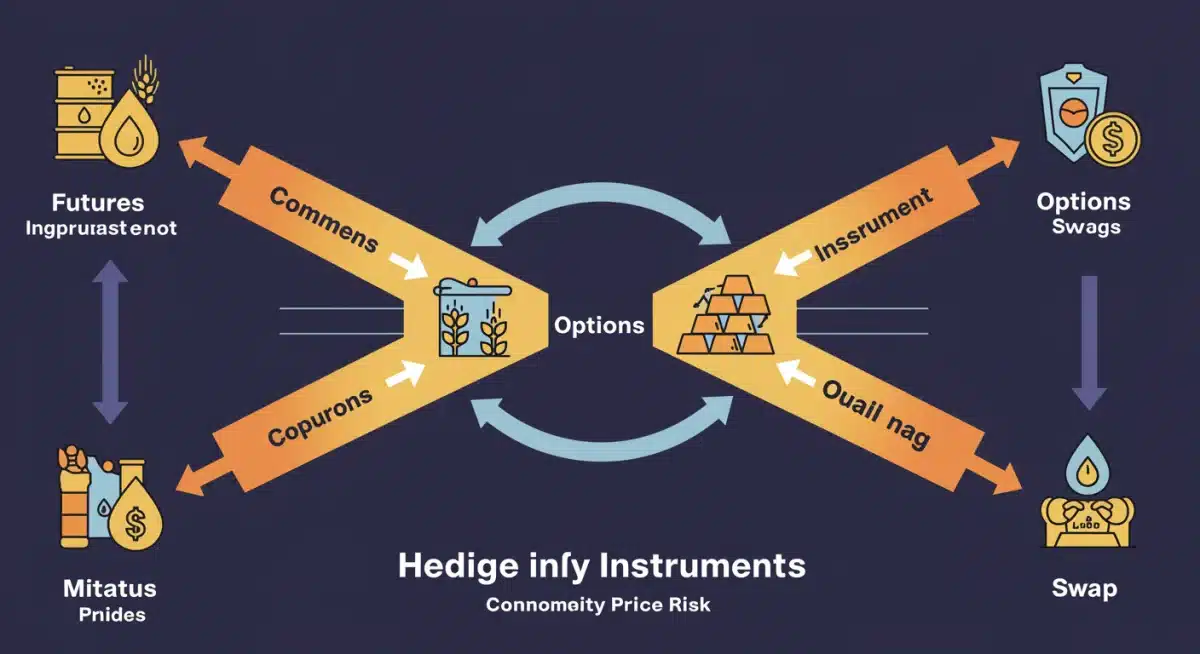
A variety of financial instruments are available for hedging commodity price risks, each with its own advantages and suitability depending on the business’s specific needs and risk tolerance. Understanding these options is paramount for constructing an effective hedging program.
- Futures contracts: Agreements to buy or sell a commodity at a predetermined price on a future date. They offer price certainty but require collateral and can involve significant margin calls.
- Options contracts: Give the holder the right, but not the obligation, to buy or sell a commodity at a specific price before or on a certain date. They provide flexibility but come with a premium cost.
- Swap agreements: Customized contracts between two parties to exchange future cash flows based on commodity prices. They offer tailored solutions and can be less volatile than exchange-traded instruments.
- Forward contracts: Similar to futures but are private, over-the-counter agreements, offering greater customization but also higher counterparty risk.
The choice of instrument depends on factors such as the volume of commodity exposure, the desired level of price certainty, the company’s financial capacity, and its risk management policies. A diversified approach, utilizing a combination of instruments, can often provide the most comprehensive protection.
Tailoring hedging strategies to business needs
One size does not fit all when it comes to hedging. A successful strategy must be tailored to the specific operational characteristics, financial goals, and risk profile of each US business. This involves a thorough analysis of their commodity exposure, including volumes, timing, and the impact of price changes on their bottom line.
For instance, a company with consistent, predictable commodity needs might benefit from a rolling hedging strategy using futures contracts, locking in prices over several periods. Conversely, a business with highly variable demand might find options contracts more suitable, as they offer flexibility without the obligation to buy or sell if market conditions become favorable. Engaging with financial experts specializing in commodity risk management can provide invaluable insight and support in designing and implementing these tailored strategies, ensuring they align perfectly with the company’s strategic objectives for 2026 and beyond.
Implementing effective hedging programs in 2026
Successful hedging goes beyond merely selecting an instrument; it requires a systematic and well-executed program. For US businesses in 2026, this means establishing clear policies, leveraging technology, and continuously monitoring market conditions. A proactive approach to implementation ensures that hedging activities genuinely contribute to financial stability rather than adding complexity.
An effective hedging program starts with a comprehensive understanding of the business’s exposure. This involves identifying all commodity-related costs, mapping out their impact on the budget, and determining acceptable levels of risk. Without this foundational analysis, hedging decisions can be arbitrary and potentially counterproductive.
Key steps for program development and execution
Developing an effective hedging program involves several critical stages, from initial assessment to ongoing management. Each step is vital for ensuring the program’s success and its ability to adapt to changing market dynamics.
- Risk assessment: Quantify commodity price exposure and define acceptable risk thresholds.
- Policy formulation: Establish clear hedging policies, including authorized instruments, limits, and approval processes.
- Instrument selection: Choose appropriate hedging tools (futures, options, swaps) based on risk profile and market outlook.
- Execution and management: Implement trades, monitor positions, and manage margin requirements.
- Performance evaluation: Regularly review the effectiveness of hedging activities against established benchmarks.
These steps provide a structured framework for managing commodity price risk. However, it is equally important to embed flexibility within the program to respond to unforeseen market shifts. A rigid strategy can quickly become obsolete in a dynamic environment.
Leveraging technology and expert insights
In today’s fast-paced markets, technology plays a crucial role in enhancing the effectiveness of hedging programs. Advanced analytics platforms can provide real-time market data, predictive insights, and automated tools for executing trades and managing positions. These technologies enable businesses to make more informed decisions and react swiftly to market changes.
Furthermore, partnering with financial institutions and commodity brokers who specialize in hedging can offer access to invaluable expert insights. These professionals bring deep market knowledge, experience with complex instruments, and the ability to navigate regulatory landscapes. Their guidance can help businesses optimize their hedging strategies, ensuring they are both effective and compliant. For US businesses, this combination of robust internal processes, cutting-edge technology, and external expertise will be instrumental in managing commodity price volatility in 2026.
Measuring success: protecting 8% of your operating budget
The ultimate goal of strategic commodity price hedging for US businesses in 2026 is tangible financial protection. While the precise percentage can vary, a well-executed hedging program aims to shield a significant portion of the operating budget from adverse price movements. Targeting an 8% protection benchmark is an ambitious yet achievable goal for many companies, reflecting a substantial mitigation of risk that directly impacts the bottom line.
Measuring the success of hedging goes beyond simply observing commodity prices. It involves a detailed analysis of how the hedging activities have impacted the company’s actual costs compared to a scenario without hedging. This requires robust tracking and reporting mechanisms to truly quantify the benefits.
Quantifying the impact of hedging on financial performance
To ascertain the effectiveness of hedging, businesses must establish clear metrics and regularly compare actual costs with hypothetical unhedged costs. This involves calculating the difference between the price paid for commodities (after hedging adjustments) and the prevailing spot market price over the same period. The savings realized through hedging represent the direct financial benefit.
For example, if a company’s unhedged exposure to a particular commodity would have led to a 10% increase in costs, and a hedging strategy limited that increase to 2%, the effective protection is 8%. This 8% directly translates into a healthier operating budget, preserving funds that can be allocated to other strategic initiatives like R&D, market expansion, or talent acquisition.
Beyond financial metrics: stability and competitive advantage
While financial protection is the primary objective, the benefits of effective hedging extend beyond simple cost savings. A stable cost base allows businesses to maintain consistent product pricing, which can be a significant competitive advantage in volatile markets. Customers appreciate predictable prices, and this stability can foster stronger relationships and market share.
Moreover, reduced financial uncertainty empowers management to make more confident long-term investment decisions. When commodity costs are predictable, capital allocation becomes more efficient, leading to better strategic outcomes. Hedging also enhances investor confidence, demonstrating prudent financial management and a commitment to stability. Therefore, achieving an 8% protection of the operating budget is not just a financial victory; it’s a strategic enabler that strengthens the overall resilience and competitive standing of US businesses in 2026.
The future of commodity hedging: trends and innovations
As markets evolve, so too do the strategies and tools available for commodity hedging. Looking towards 2026 and beyond, several key trends and innovations are shaping the future of risk management for US businesses. Staying abreast of these developments is crucial for maintaining a competitive edge and optimizing hedging effectiveness.
The increasing digitalization of financial markets, coupled with advancements in data analytics and artificial intelligence, is transforming how businesses approach hedging. These technological shifts promise greater precision, efficiency, and adaptability in managing commodity price volatility.
Advanced analytics and AI in risk management
The integration of advanced analytics and artificial intelligence (AI) is revolutionizing commodity risk management. AI-powered platforms can process vast amounts of market data, identify complex patterns, and generate predictive models with unprecedented accuracy. This allows businesses to anticipate price movements more effectively and fine-tune their hedging strategies in real time.
- Predictive modeling: AI algorithms can forecast commodity prices based on macroeconomic indicators, geopolitical events, and supply-demand dynamics.
- Automated execution: AI-driven systems can execute hedging trades automatically based on predefined rules and market triggers, optimizing timing and minimizing human error.
- Scenario analysis: Advanced analytics enable businesses to simulate various market scenarios and assess the potential impact on their hedging portfolios, leading to more robust strategies.
These technological advancements empower businesses to move from reactive hedging to proactive, data-driven risk management, significantly enhancing their ability to protect operating budgets.
Sustainability and ESG factors in commodity markets
Beyond traditional financial metrics, sustainability and Environmental, Social, and Governance (ESG) factors are increasingly influencing commodity markets and, consequently, hedging strategies. Consumer demand for ethically sourced and environmentally friendly products is growing, leading to premiums for sustainable commodities and potential penalties for non-compliant ones.
Businesses must consider how ESG risks, such as carbon pricing, regulatory changes related to environmental impact, or social concerns in supply chains, might affect commodity availability and pricing. Hedging strategies may need to evolve to incorporate these non-financial risks, perhaps through mechanisms that account for carbon credits or sustainable sourcing premiums. Integrating ESG considerations into commodity hedging is not just about compliance but also about long-term value creation and maintaining brand reputation in an increasingly conscious market. This forward-looking perspective ensures that hedging strategies remain relevant and effective in a rapidly changing global economy.
| Key Point | Brief Description |
|---|---|
| 2026 Volatility Drivers | Geopolitical shifts and climate change are primary forces impacting commodity prices. |
| Budget Protection Goal | Strategic hedging aims to protect up to 8% of US businesses’ operating budgets. |
| Hedging Instruments | Futures, options, and swaps are key tools for mitigating price risk. |
| Future of Hedging | Advanced analytics, AI, and ESG factors are shaping future hedging strategies. |
Frequently asked questions about commodity price hedging
Commodity price volatility refers to the rapid and often unpredictable fluctuations in the prices of raw materials like oil, metals, and agricultural products. These movements are driven by factors such as supply and demand imbalances, geopolitical events, and climate change, creating significant uncertainty for businesses relying on these inputs.
In 2026, US businesses face a confluence of global economic uncertainties, persistent geopolitical tensions, and escalating climate impacts. These factors are projected to amplify commodity price volatility, making strategic hedging essential for protecting operating budgets, ensuring financial stability, and maintaining competitive pricing in the market.
Common hedging instruments include futures contracts, which lock in a price for a future transaction; options contracts, offering the right but not the obligation to buy or sell; and swap agreements, customized exchanges of cash flows. Each instrument serves different risk management needs and levels of flexibility for businesses.
Success is measured by comparing actual commodity costs (after hedging) against what those costs would have been without hedging, often referred to as the unhedged benchmark. The difference represents the financial protection achieved. Additionally, stability in budgeting and competitive pricing power are key indicators of effective hedging.
Technology, particularly AI and advanced analytics, is enhancing predictive capabilities and automated execution in hedging. ESG factors are increasingly influencing commodity pricing and supply chains, requiring businesses to integrate sustainability risks and opportunities into their hedging strategies for long-term resilience and brand integrity.
Conclusion
The persistent threat of commodity price volatility in 2026 demands a proactive and sophisticated response from US businesses. Strategic hedging is no longer an optional financial tool but a fundamental pillar of sound risk management. By understanding the underlying drivers of market fluctuations, carefully selecting appropriate hedging instruments, and meticulously implementing robust programs, companies can significantly mitigate their exposure. The goal of protecting up to 8% of operating budgets is not merely an aspiration but a tangible benefit achievable through informed, strategic action. As the global landscape continues to evolve, embracing innovation in hedging, including advanced analytics and ESG considerations, will be paramount for ensuring sustained financial stability and a competitive edge in the years to come.