The profound influence of historical events from the last 50 years on U.S. youth today is evident in their evolving social consciousness, political activism, and cultural identities, shaping their perspectives on justice, equality, and progress.
Have you ever wondered how the past shapes the present, especially for young people? The concept of Cultural Echoes: How Historical Events from the Last 50 Years Influence U.S. Youth Today is more relevant than ever. From monumental social shifts to rapid technological advancements, the experiences of previous generations have left an undeniable imprint on the values, beliefs, and actions of America’s youth.
The Civil Rights Movement and Its Enduring Legacy
The Civil Rights Movement, peaking in the 1960s but with ripples extending well into the following decades, laid foundational principles that continue to resonate with U.S. youth. While many young people today were born long after its major legislative victories, the struggle for racial equality and justice remains a powerful force in their lives and activism.
This historical period instilled a deep-seated commitment to challenging systemic inequalities. Modern youth often view issues through a lens sharpened by the sacrifices and triumphs of civil rights leaders. They are acutely aware of social injustices, whether related to race, gender, or sexual orientation, and are more likely to speak out and organize for change.
Activism and Social Justice Awareness
The lessons from the Civil Rights Movement have translated into contemporary forms of activism. Young people are not just passive observers; they are active participants in movements advocating for a more equitable society. This includes their engagement with:
- Black Lives Matter movement, drawing direct parallels to past civil rights struggles.
- Advocacy for LGBTQ+ rights, pushing for greater inclusion and acceptance.
- Feminist movements, striving for gender equality in all spheres of life.
These movements underscore a generational commitment to social justice, a direct echo of the battles fought decades ago. The understanding that change requires sustained effort and collective action is a direct inheritance from this era.
In conclusion, the Civil Rights Movement’s emphasis on equality and justice continues to profoundly influence the social consciousness and activism of U.S. youth, empowering them to challenge existing norms and advocate for a more inclusive future.
The Vietnam War and Skepticism Towards Authority
The Vietnam War era, marked by widespread anti-war protests and a growing distrust in government, profoundly shaped the collective psyche of a generation. Today’s youth, while not directly experiencing the conflict, inherit a legacy of skepticism towards authority and a critical approach to geopolitical interventions.
This period fostered an environment where questioning official narratives became normalized. The revelations of government deception surrounding the war led to a public loss of faith in institutions. This historical context provides a backdrop for how contemporary youth engage with political discourse and international policy.
Distrust in Government and Media Scrutiny
The echoes of Vietnam are visible in the way young Americans approach information and leadership. They often exhibit a healthy, though sometimes cynical, skepticism:
- Demanding transparency from political leaders and governmental bodies.
- Critically analyzing media reports, especially in times of conflict.
- Questioning military interventions and their long-term implications.
This critical stance is not merely rebellion; it is a learned behavior, an inherited caution against unchecked power and propaganda. The ethos of independent thought and thorough scrutiny of information sources remains a key characteristic.
Ultimately, the Vietnam War’s legacy instilled a profound sense of caution and critical inquiry regarding governmental actions and media representations, shaping a generation of youth who are less likely to accept information at face value.
The Rise of Technology and the Digital Revolution
The last 50 years have witnessed an unprecedented technological revolution, from the birth of the internet to the ubiquity of smartphones. This digital transformation has not just changed how U.S. youth communicate, but fundamentally altered their perceptions of connectivity, information, and identity.
Growing up in a hyper-connected world means that digital literacy is innate. The internet, social media, and instant communication platforms are not tools they learned to use; they are integral parts of their daily existence and worldview. This constant connectivity has reshaped social interactions, educational approaches, and even political engagement.
Global Awareness and Digital Activism
The digital age has opened up new avenues for engagement and awareness. Young people are:
- More globally aware, with instant access to news and perspectives from around the world.
- Engaged in digital activism, using online platforms to organize, advocate, and spread awareness for causes.
- Developing new forms of identity and community through online interactions.
This technological immersion has fostered a generation that is interconnected, informed, and capable of mobilizing quickly. The boundaries of their world are far wider than those of previous generations, leading to a more expansive and inclusive worldview.
The digital revolution has profoundly reshaped the experiences of U.S. youth, fostering a generation that is globally connected, technologically adept, and capable of leveraging digital platforms for social change and self-expression.
Environmental Movement and Climate Consciousness
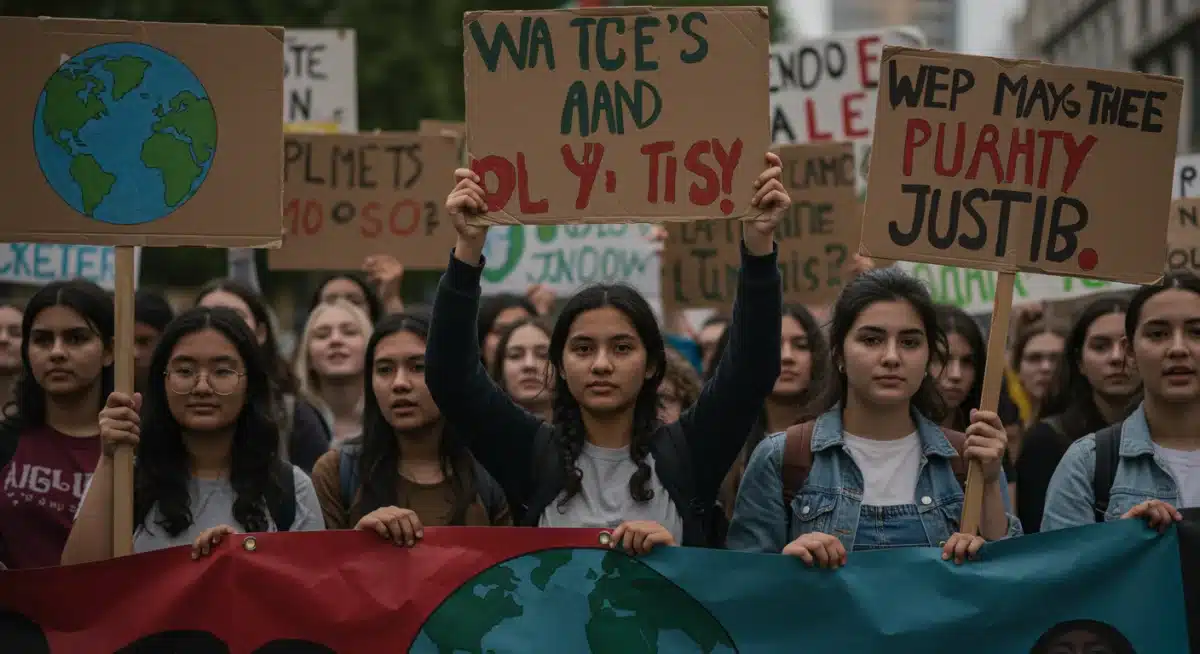
The environmental movement, gaining significant traction in the 1970s with the first Earth Day, has steadily grown into a global concern. For today’s U.S. youth, climate change and environmental sustainability are not abstract concepts but pressing realities that directly impact their future.
Decades of scientific research, environmental disasters, and public awareness campaigns have culminated in a generation deeply concerned about the planet’s health. They have inherited a world grappling with the consequences of industrialization and are keenly aware of the urgency required to address these challenges.
Sustainability and Eco-Anxiety
This heightened environmental awareness manifests in various ways among young people:
- Advocacy for sustainable practices and policies, from renewable energy to waste reduction.
- A sense of urgency and sometimes ‘eco-anxiety’ about the future of the planet.
- Support for political leaders and movements prioritizing environmental protection.
Their commitment to environmental causes is not just political; it’s often deeply personal, driven by a desire to protect their future and the world they will inherit. This generational concern is a direct continuation of the environmental stewardship first championed decades ago.
The enduring environmental movement has instilled a strong climate consciousness in U.S. youth, driving their engagement with sustainability, advocacy for eco-friendly policies, and a profound concern for the planet’s future.
Economic Shifts and Financial Realities
The economic landscape of the last 50 years, marked by periods of inflation, recessions, and growing income inequality, has profoundly influenced the financial realities and anxieties of U.S. youth. They face a job market and cost of living vastly different from their parents’ or grandparents’ generations.
The dream of easily attainable homeownership and stable, lifelong employment has become more elusive for many. This economic shift has led to delayed milestones, such as marriage and starting families, and a reevaluation of traditional career paths. Their financial outlook is often characterized by pragmatism and a need for adaptability.
Gig Economy and Entrepreneurial Spirit
In response to these economic shifts, young people have adapted in innovative ways:
- Embracing the gig economy, seeking flexibility and diverse income streams.
- Cultivating an entrepreneurial spirit, creating their own opportunities rather than relying solely on traditional employment.
- Prioritizing financial literacy and seeking alternative paths to financial stability.
This generation is often more cautious with finances, burdened by student loan debt, and keenly aware of the need to be resourceful. Their economic experiences shape their political views and their expectations for government intervention in economic matters.
The economic shifts of the past five decades have shaped U.S. youth into a generation that is financially pragmatic, innovative in their career approaches, and acutely aware of the challenges and opportunities within a changing economic landscape.
Globalization and Multiculturalism
The increasing interconnectedness of the world over the last 50 years, driven by trade, migration, and digital communication, has fostered a more globalized and multicultural U.S. society. This has profoundly influenced the cultural identity and worldview of today’s youth.
Growing up in diverse communities and being exposed to a myriad of cultures through media and personal interactions, young people often possess a more expansive and inclusive understanding of identity. They are more likely to celebrate cultural differences and advocate for diversity.
Cultural Fluidity and Open-mindedness
This exposure to globalization and multiculturalism has resulted in:
- Greater cultural fluidity, embracing elements from various traditions and identities.
- Increased open-mindedness and tolerance towards different lifestyles and beliefs.
- A stronger emphasis on inclusivity and representation in media and society.
The cultural landscape they navigate is a rich tapestry of influences, leading to a generation that often rejects rigid categories and embraces a more fluid and intersectional understanding of identity. This openness is a direct product of the globalized world they inherited.
The forces of globalization and multiculturalism have cultivated a U.S. youth that is culturally fluid, open-minded, and deeply committed to inclusivity, reflecting a broader understanding of identity and community in an interconnected world.
The Evolution of Social Norms and Identity
Over the past five decades, social norms surrounding gender, sexuality, and family structures have undergone significant transformations. These shifts have profoundly impacted how U.S. youth perceive and construct their own identities and relationships.
The dismantling of traditional gender roles, increased acceptance of diverse sexual orientations, and the rise of varied family configurations have created a more expansive space for self-expression. Young people today are often at the forefront of these evolving conversations, pushing boundaries and advocating for greater authenticity.
Gender Identity and Inclusivity
The impact of these evolving social norms is evident in:
- Greater fluidity in understanding gender identity and expression.
- Increased advocacy for LGBTQ+ rights and acceptance within mainstream society.
- A challenge to conventional notions of masculinity and femininity.
This generation often champions inclusivity, striving to create spaces where all identities are respected and affirmed. Their understanding of self and others is shaped by a historical trajectory towards greater freedom and recognition for diverse ways of being.
The ongoing evolution of social norms regarding gender, sexuality, and identity has empowered U.S. youth to embrace greater fluidity and inclusivity, challenging traditional constructs and advocating for a society that celebrates diverse forms of self-expression.
| Key Historical Influence | Impact on U.S. Youth |
|---|---|
| Civil Rights Movement | Fostered strong social justice awareness and activism. |
| Digital Revolution | Created a globally connected, tech-savvy, and digitally active generation. |
| Environmental Movement | Instilled deep climate consciousness and sustainability advocacy. |
| Economic Shifts | Led to financial pragmatism, entrepreneurial drive, and adaptability. |
Frequently Asked Questions About Youth and Historical Influence
Past social movements, such as the Civil Rights Movement, provide a framework and inspiration for current youth activism. They demonstrate the power of collective action, inform strategies for challenging systemic inequalities, and instill a lasting commitment to justice, shaping how young people approach modern social issues like racial equity and gender equality.
Technology, particularly the internet and social media, allows youth unprecedented access to historical information and diverse perspectives. It enables them to research, discuss, and share historical content, fostering a more immediate and interactive understanding of the past, often connecting historical events to contemporary issues and movements.
Historical events like the Vietnam War and subsequent periods of governmental scrutiny have fostered a critical perspective in U.S. youth. This often translates into heightened political engagement, as they are more likely to question authority, demand transparency, and actively participate in political processes to advocate for change and hold leaders accountable.
Economic shifts, including increased cost of living and student debt, have led young Americans to adopt more pragmatic aspirations. They often prioritize financial stability, embrace flexible work models like the gig economy, and seek entrepreneurial ventures, adapting their career and life goals to current economic realities rather than traditional paths.
Multiculturalism, fueled by globalization and diverse communities, profoundly influences youth identity by fostering greater cultural fluidity and open-mindedness. Young people are more likely to embrace diverse traditions, challenge rigid identity categories, and advocate for inclusivity, reflecting a broader, more nuanced understanding of personal and collective identity.
Conclusion
The tapestry of U.S. history over the last five decades is rich with events that have profoundly shaped the worldview, values, and actions of today’s youth. From the enduring quest for civil rights to the transformative power of the digital age, and from the critical lens applied to authority figures to the urgent call for environmental stewardship, each historical chapter has left its indelible mark. This generation is not merely a product of the present; they are active inheritors and interpreters of a complex past, continuously echoing and redefining these historical influences in their pursuit of a more just, equitable, and sustainable future. Understanding these cultural echoes is crucial to appreciating the dynamic forces driving U.S. youth today.